info@iitagne.org

Uncategorized

Summary-Boundary-less Education: Connect, and Collaborate to Transform Education,

Boundary-less Education:  Connect, and Collaborate to Transform Education

It is no longer business as usual in the education field!   The blurring and dissolution of boundaries is a necessary condition for achieving the goals of education today, be it to meet the rapid development agenda of nations that require expanded access and quality, or be it the need for increased agility and relevance to address rapidly changing skills requirements of the marketplace. Can we provide quality education at scale and relevant to the demands of an effective workforce, while fostering new opportunities for entrepreneurship and venture?

IIT AGNE conducted a symposium on March 5th, 2016 which brought a panel of experts, thought leaders and practitioners from academia and industry to illuminate some of the transformative opportunities presented by the blurring of boundaries in education, as well as the systemic “readiness” conditions for success.

The discussion was chaired by Dr. M.S. Vijay Kumar, Associate Dean & Senior Strategic Advisor for Digital Learning at MIT and included Professor Christopher Dede, Timothy E. Wirth Professor in Learning Technologies at Harvard University; Sanjay Sarma, Vice President for Open Learning, MIT; Jean Hammond, Co-founder and partner at LearnLaunch and Dr. Tinsley Galyean, Executive Director, Curious Learning.

Vijay Kumar opened the discussion by framing the themes to be addressed by the panel. As the world’s population increases by the billions, countries need to consciously start acting to scaling up education to train very large numbers of people and give them the tools to succeed in a global agile economy to meet the challenges of a rapidly changing world. This true of primary education, where millions of people are still left behind; and it is true of higher level or tertiary education, where the costs of a traditional college education are becoming prohibitive. At the same time, there cannot be compromise on quality and the skills and knowledge imparted have to equip the students to be flexible, innovative and entrepreneurial in their approach. It is very clear that Technology is going to play an increasingly critical role in reinventing education for the 21st century.

Sanjay Sarma, who leads MIT’s open education initiatives, made the point that the classroom system of education is an industrialized system of training large number of people in the shortest possible time to be productive citizens, developed in the 19th century as the world began transitioning from a rural agrarian to urban industrial economy. But it does not fit how human beings learn, where learning on a topic grows slowly but steadily with time, then accelerates to reach a peak, before declining. In addition, we are motivated by having constant positive feedback and knowing the bigger picture in terms of learning goals and complex concepts.

Constant and ongoing testing promotes learning by weeding out superficial knowledge as we have to think about what we learnt and strengthen conceptual understanding. The modern education system fails in this respect by only focusing on the peak learning and using tests as a final measure of success. A new educational system has to succeed by customizing to the actual process by which human beings learn and use testing to reinforce and support the learning process.

Professor Worth Dede talked about the role of technology in enabling curiosity-driven learning in children. He showed videos of children learning about the human impact on the environment by exploring a 3-D world that included a housing development with fertilizers sprayed on lawns that impact the ecosystem of a pond/lake, which can be measured over time. This is reinforced by taking groups of children to a real pond, where they can explore the impact by taking actual measurements. The children use their natural curiosity to explore and learn by doing tasks in a problem solving context in both an artificially constructed game and the real world.

Jean Hammond, a successful technology executive and serial entrepreneur, runs LearnLaunch, a technology incubator for Ed-Tech startups in the Boston area. She described the significant opportunities for entrepreneurs in creating new technology that can be used to promote, measure and reinforce learning on a very large scale. Entrepreneurs are needed to exploit new trends such as gamification, self-paced learning and authenticated learning/testing. There is now significant private and public investment in creating and encouraging the use of education technologies, though venture capital investment is relatively low compared to other fields.

Finally Dr. Tinsley Gallean showed videos of young children with no access to education, living in remote communities and slums in Africa, who were provided tablets loaded with educational apps for young learners and left with no instruction. The children took only a few minutes to collectively experiment and find out how to turn them on, then in a few months proceeded to use the apps to master the alphabets and numbers. Within a year, four year olds were using the tablets together with the loaded music app to create music in novel ways. These children were roughly at the same level as their counterparts who were in a formal education system. This shows that the natural inventiveness and curiosity of children can be harnessed to enable young learners who have little access to formal education to catch up with their more fortunate peers.

This discussion was followed by a lively discussion with an informed audience that focused on topics such as the cost of learning, downsides of an educational approach scaled to large numbers and the possible limitations and flaws of the emerging educational systems.  Overall the presentations and the discussions highlighted the significance of transcending traditional boundaries  between disciplines, research and learning  as well as the physical and the virtual for seeking innovative solutions to advance quality educational opportunity.
Read more

Transformational Technologies of Tomorrow: Converging AI, Big Data and Robotics, Held on 23rd January, Havana Conference Room, Cambridge, MA 02142

A Panel Discussion on the Convergence of Artificial Intelligence, Big Data Analytics and Robotics technologies and implications held on 23rd January 2016, 2.004.00 PM, Cambridge Innovation Center, 1 Broadway, Cambridge, MA

Distinguished Panel & Speakers:
1. Subrata Das, President and Chief Scientist, Machine Analytics
2. Suchit Jain, VP Strategy & Community, Dassault Systemes SOLIDWORKS Corporation
3. Ashish Nadkarni, Program Director, Enterprise Servers and Storage, International Data Corporation
4. Stephen O’Dea, Senior Program Manager, Remote Presence, iRobot Corporation

IIT AGNE held the third event in the run up to Leadership Conference 2016, with the theme “Leading transformation for a better tomorrow: Technologies that lift the human spirit”.

Today we google the question that just popped in our head using Siri, set our thermostat using a smartphone and book a ride to the airport on Uber, as Roomba cleans our living room floors.

What about dreaming of living in a Smart home equipped with smart appliances, going to the office or on vacation in a driverless car, playing with a smart basketball and riding on a bike with a Smart helmet, monitoring the health of your elderly parents or family while you are on a business trip, and infusing fashion with smart technology embedded in a dress?

Technologies like Artificial Intelligence, Big Data, IoT and Robotics are no longer exclusive to the purview of research labs or capital intensive manufacturing environment. Increasingly, tools and knowledge based on the ideas in these domains are becoming common place and fundamentally transforming our lives, the nature of our work, our thinking and our work schedules as well. The sharing economy based on these technologies, pioneered by companies like AirBnB and Uber, has opened up a whole host of options for us as producers and consumers.

How is the landscape changing within these domains of knowledge? How are they enhancing our understanding of ourselves, our society and the different environments we function in? How is technology impacting us as individuals, our workplaces and society as a whole?

At the same time as new solutions and technologies are harnessed to relieve our pain points, we are facing a different set of challenges arising out of these applications.


Read more

2016 Leadership Conference Volunteer Meeting, Saturday, Mar 19, 2016, 9:00 AM-11:00 AM, MIT, 77 Mass Ave., Cambridge, MA

To plan and prepare for this conference we are organizing a series of volunteer meetings. These meetings will be joint sessions of all teams – Operations, Marketing, Finance, Sponsorship, Web/IT, Women@IIT. The first part of the meetings will allow the teams to update all the volunteers on progress to date. Following that, we will break up into separate meetings for the individual teams to work on their plans. While all the teams have some people already helping with this endeavor, we need more volunteers to join us. Please attend these meetings and join in this effort. Please spread the word among your friends and colleagues and invite them to join. All are welcome.

The meetings will be held on the 1st and 3rd Saturdays of the month. They will alternate between MIT and Tufts locations. We will send reminders the week of the meeting with details including location.

MIT

Building 5. Rooms 5-217, 5-231, 5-232, 5-234

77 Mass Ave.,

Cambridge, MA

Read more

Summary: The Future of Clean Energy Technologies: Solar, Batteries and Lighting

IMG_3117IMG_3113 IMG_3099 IMG_3104 IMG_3107

IIT AGNE sponsored and conducted an event on the future of clean energy technologies on December 9th, 2015 at the Anderson Auditorium at Tufts University. This was the second event in a series leading up to the Leadership Conference 2016 organized by IIT AGNE, with the theme “Leading transformation for a better tomorrow: Technologies that lift the human spirit”.
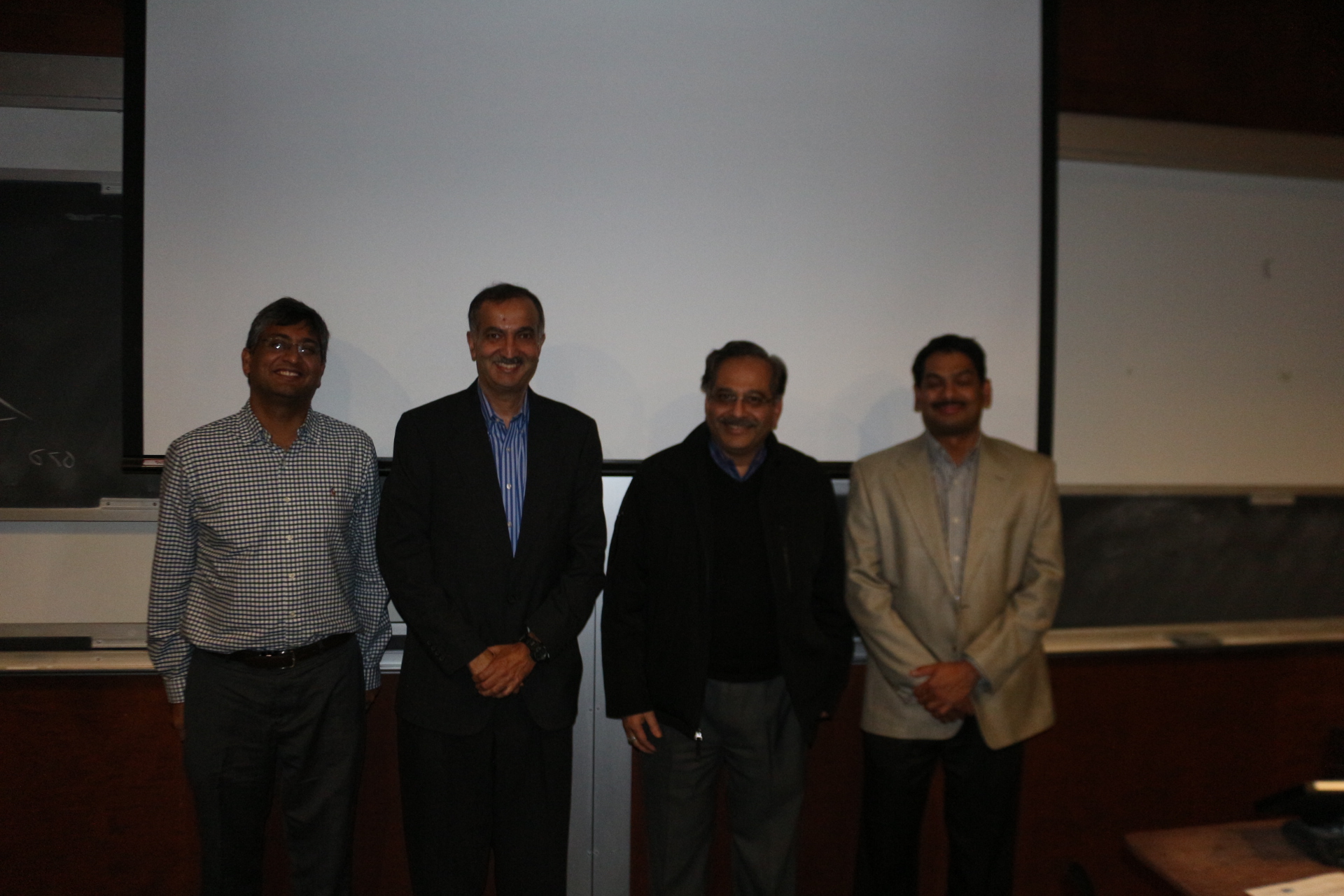
This event featured three experts talking about solar, batteries and lighting: Vivek Soni, a leading cleantech venture advisor at Boston Cleantech Partners; Makarand “Chips” Chipalkatti, a pioneer in the area of LED lighting and Suresh Sriramulu, veteran technology development leader in battery technologies.
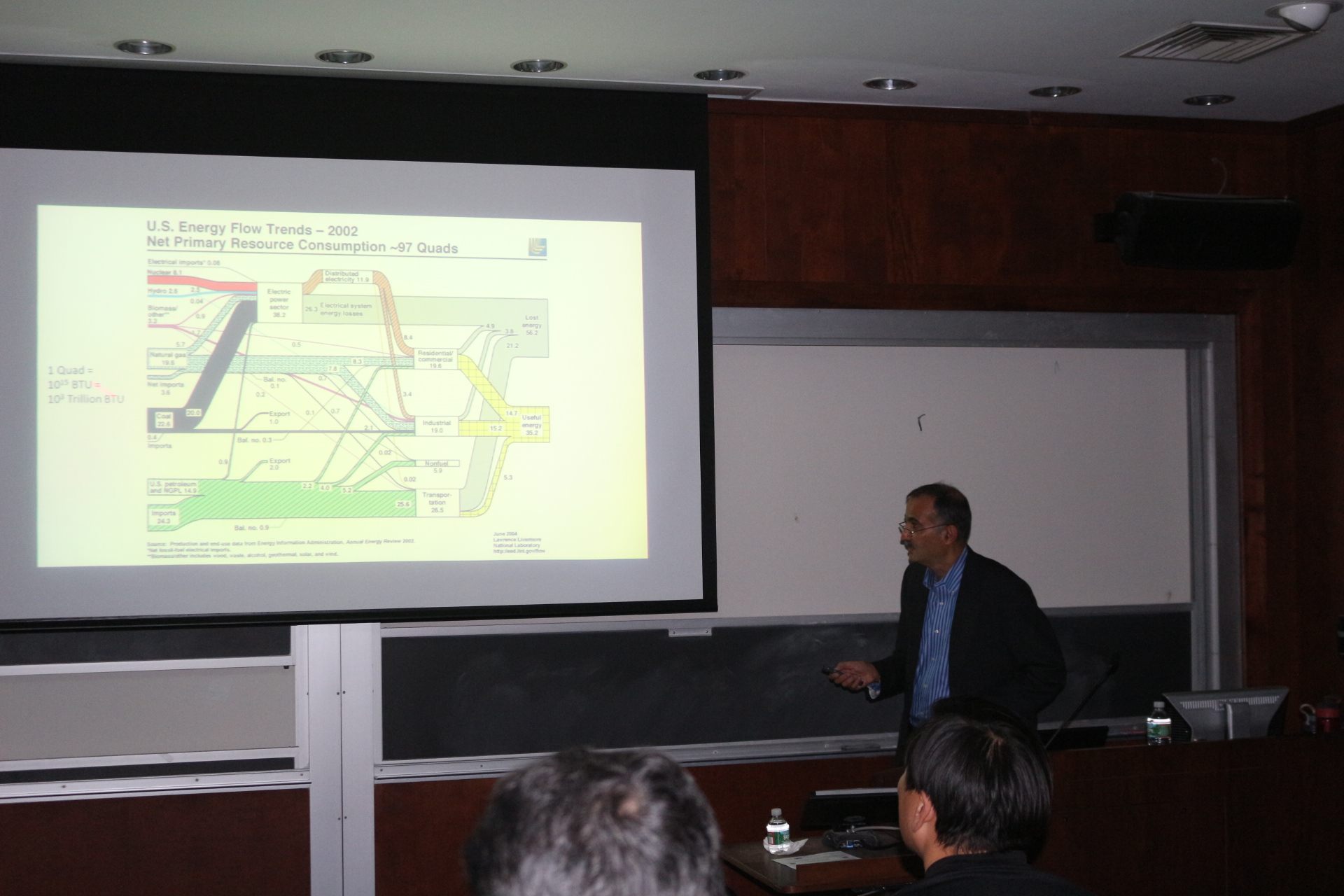
Vivek Soni, currently a Venture Advisor at Boston Cleantech Partners, started with a broad description of the energy and water usage is used in the United States, the impact on climate change and where technology can have a very large impact. Using Energy Flow diagrams published by the Lawrence Livermore National Laboratory, Vivek highlighted the fact that the total amount of energy used by the United States has not changed significantly in the past twenty years, the energy use per capita has decreased and overall CO2 emissions by the United States have actually decreased significantly (by roughly 7%). This is due to massive investments in and deployment of clean technologies, including solar, wind and geothermal technologies; as well a significant reduction in coal plants use for energy generation and pollution control and switching to natural gas for electricity generation.
However, this will not be sufficient to forestall the effects of climate change, as developing countries rapidly industrialize and increase their carbon emissions. As evidenced by 2015, which has been one of the warmest years in more than a century, climate change is happening, as global temperatures keep pace with increasing CO2 concentrations, which are at their highest levels in the Earth’s history over the past million years.
While the USA and the European countries, which have the highest per capita emissions, are expected to continually decrease their annual emissions, the rest of the world will continually increase their carbon emissions. In particular, India and China have doubled and tripled their per-capita carbon emissions, respectively, in the past twenty five years. Vivek gave the example of Indonesia, where a massive peat fire has released more greenhouse gases than Germany does in a year. Air pollution due to particulate emissions has made cities like Beijing and Delhi the most hazardous to human health in the world.
Hence concerted global action is urgently needed to reduce greenhouse emissions, reduce pollution and limit the severe effects of climate change, which include monster hurricanes, submergence of low lying areas and killer heat waves. The historic COP21 conference, held in December 2015, had 192 countries that have pledged action that is estimated to limit global temperature rise to 3oC (not the target of 2oC). These countries, which account for 90% of global emissions, have also agreed to make annual investments, estimated at 100 billion US dollars, needed to reduce per capita emissions from the developing world.
Vivek then outlined the technologies needed to limit greenhouse gases (GHG) and meet the target temperature rise. According to McKinsey’s global GHG abatement model, a number of clean technologies have significant potential to provide net abatement at a modest or negative cost i.e. the benefits exceed the investment costs incurred. He mentioned that Goldman Sachs has recently identified “low-carbon” technologies with the greatest economic impact potential as Solar Photovoltaics, On-shore Wind, LED lighting, Hybrid/Electric Vehicles and Energy Storage.

All of these can produce economic growth and create jobs, while having a strong impact on climate change. Solar photovoltaics (PV) has been a major success cleantech success story, globally and in the United States, as mature technologies, manufacturing at scale, government policies and innovative financing have created incentives for manufacturing producers, installers and consumers. The installed cost of a PV cell has dropped precipitously by 80% or more in the period 2000-2015, leading to an average growth rate of 55% for US residential installations, which now number more than a million.
Solar photovoltaics (PV) have created almost 2.5 million jobs in 2014 in the United States. There are more than 36,000 solar systems installed in Massachusetts alone, with almost 1 GW capacity installed in 2015 at a cost of $ 600 million, creating more solar jobs than even in a sunny state like Arizona. The picture is getting brighter as it is expected that the number of solar installations in Massachusetts will double by the summer 2016. It is expected that by 2020, residential installations will account for almost half of all solar installed capacity in the United States, estimated to be 15 Gigawatts power.
This set the stage for “Chips” Chipalkatti of Dr. Chips Consulting LLC, to talk about LED lighting, which is the next big low-carbon technology. Chips, a renowned LED expert who pioneered the LED lighting business while at Osram Sylvania, now consults with governments, non-profits and private sector entrepreneurs across the world.
LED lighting is an energy-efficient, durable and long-life lighting solution that has unique attributes to make an impact on climate change. Like Solar PV, LEDs have plummeted in cost by 10-20% each year and have become more efficient, producing 20-40 times more light (lumens/W) compared to standard incandescent bulbs.
LEDs are also a compact, solid state electronics, multi-colored technology that can be used to create unique intelligent lighting solutions. A simple change to LED lights in all US homes by 2020 can lead to 15% savings in energy use, and 40% savings by 2030, (equivalent of taking 35 million vehicles off the road), adopting intelligent LED lighting systems can potentially save additional 28% more in energy usage. This becomes significant when extended to the rest of the world, especially populous countries that produce large amounts of carbon emissions.
The LED lighting ecosystem extends to new materials, intelligent sensing and controls, communication, seamless integration with architecture and smart grids. LED lights can be made in numerous form factors and colors to create personalized smart lighting schemes that can convey information and change color to match the time of the day or night. LED lighting is playing a big role in the coming Internet of Things (IoT) revolution, when lights can be integrated with or attached to any object, worn on clothing or even ingested. Additionally, since LEDs are a solid state technology, there are opportunities to make them even more environmentally friendly at end of product life by remanufacturing new LED lights from old, thus avoiding filling up landfills and wasting the energy used to make them.
LEDs have the potential to transform lives in developing countries, where 2 billion people or 1/4th of the world’s population still lives without electricity, with the largest number in India and Africa, with 125 million households in India and 105 million households. In these regions, kerosene is frequently used at night for lighting, which is inefficient, expensive and produces large carbon emissions.
LEDs can be combined with batteries and solar technologies in an off-grid solution to bring light to remote and under-developed areas and reduce emissions. Chips described his work on a unique project in Africa for lighting on fishing boats around Lake Victoria, where the fishermen effectively buy a small portion of electricity by renting batteries and LED light from an energy hub.
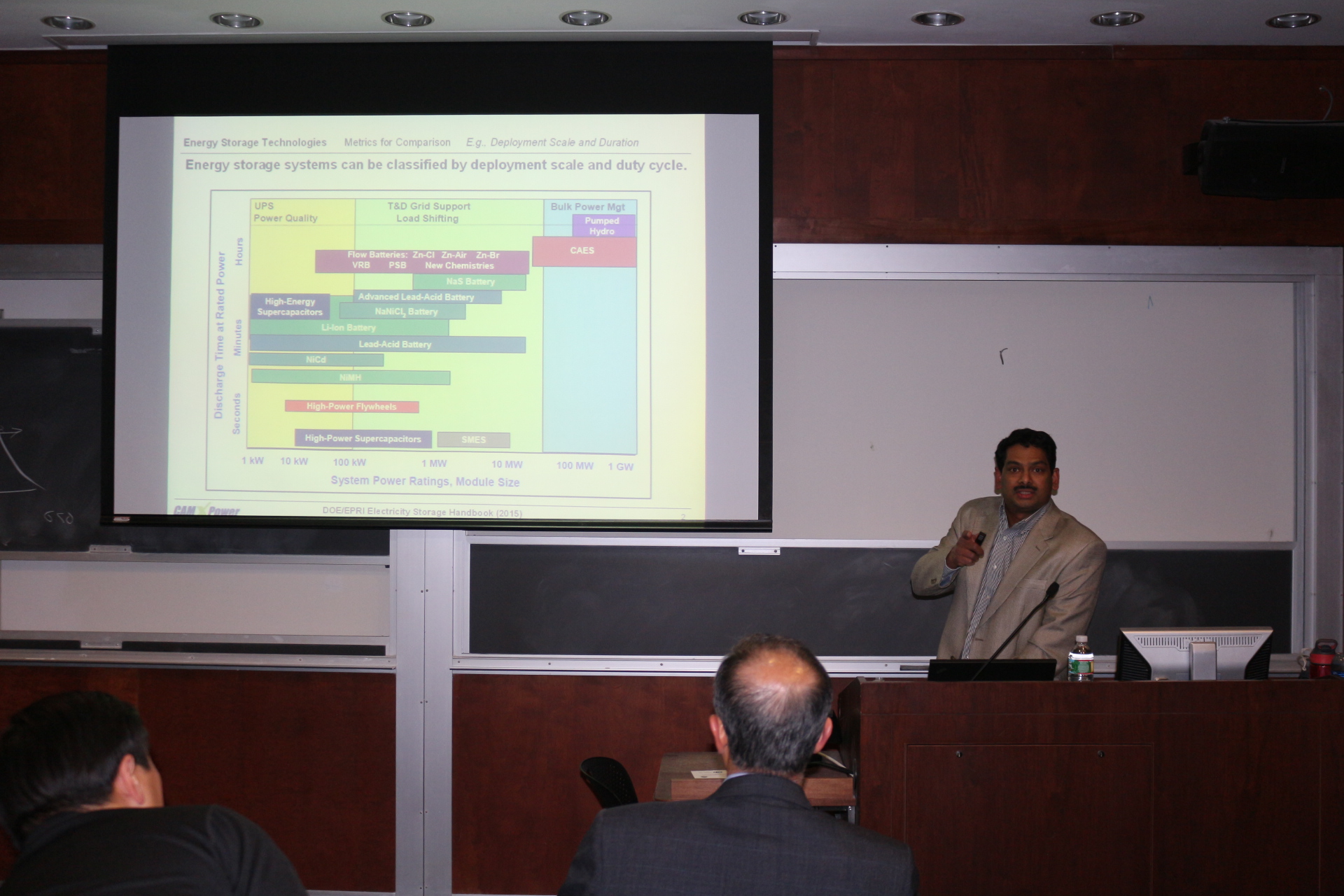
Finally Suresh Sriramulu, CTO of CAMX Power, spoke about the impact of energy storage technologies, and specifically batteries on climate change. Energy storage is critical for the implementation of low-carbon technologies in enabling the deployment of renewable sources of energy as well as reducing CO2 emissions from vehicles. Batteries are ideal for shifting loads from day to night and provide high quality consistent power when hybridized with renewable energy sources. By enabling reduced consumption of fossil fuels, batteries also enable reduction of CO2 emissions from automobiles.
Like Solar PV and LED lighting, batteries for enabling low-carbon technologies are well on their way to commercialization and widespread adoption. Several re-chargeable battery technologies with a wide range of performance characteristics are being developed today or already in use. For example, NiMH (Nickel Metal Hydride) and Lithium-Ion batteries are already being widely used in consumer electronics applications, but are also attractive for electric/hybrid vehicles as compact and light battery packs.
Since vehicles are a primary source of GHG emissions and pollution, vehicle mileage and emissions standards are getting more stringent around the world. These stringent regulations can only be ultimately be met by a large scale shift to electric vehicles (xEVs). Automakers are responding by commercializing vehicles with different levels of electrification enabled by batteries. A typical light-duty vehicle with an internal combustion engine, outputs ~ 200+ grams of carbon dioxide per km driven. This can be reduced to ~ 80g/km by hybridizing with batteries in a so called start-stop or microhybrid configuration. In contrast a plug-in hybrid vehicle or PHEV effectively outputs 50 g CO2/km, and an all-electric vehicle or EV has zero CO2 emissions because the batteries on board the vehicle can be charged by electricity from the grid.
Because rechargeable batteries based on Li-ion technology has been used for other applications with a well-developed supply chain and manufacturing maturity, their adaptation for vehicle applications has been rapid. Consequently, first generation xEV vehicles using Li-ion battery technology such as Tesla vehicles, Nissan Leaf and Chevy Volt are already on the road today.
As a result, Hybrid/Electric vehicle sales are forecasted to increase by roughly ten times over the next ten years, though it will be small in number compared to the IC engine driven vehicles. Although one of the limitations for widespread deployment of xEVs has been the additional vehicle cost associated with the on board Li-ion battery, it is forecast that vehicle battery costs will be halved by 2020 with the development of dedicated battery plants for automobile use such as the Tesla Gigafactory.
To drive further widespread adoption, innovations are needed in government policies, new technologies for increasing battery energy density and enhancing battery safety, leasing/financing models and in infrastructure.

Read more

A Terrific panel on entrepreneurship and opportunities in Healthcare

[srizonfbalbum id=2]

IIT AGNE sponsored and conducted an event on November 14, 2015 at the Ray and Maria Stata Center at MIT to welcome new students to the Boston area. Raj Laad, Raj Melville and Vijay Kumar from IIT AGNE welcomed the new students and outlined plans for the Leadership Conference 2016, which is being organized by IIT AGNE, from August 12­14, 2016 at the Rhode
Island Convention Center.

A panel of leading healthcare entrepreneurs, spanning lifesciences, biomedical and biotechnology, convened to discuss entrepreneurial opportunities for students starting their careers in the field.

The panel consisted of Parag Mehta, CEO, Aveta Biomics, PJ Anand, Founder and CEO, Alcyone Lifesciences, Purnanand Sarma, President & CEO, Taris Biomedical and Niven Narain, Co-founder, President and CTO, Berg; conducted a lively discussion that focused on the economics of drug and treatment development process, future directions in healthcare and where opportunities lie. The panel conducted an engaging discussion with the audience, which consisted of students and members of the community.

There is an ongoing revolution in the pharmaceutical industry as healthcare moves towards value and outcome based payment, where insurance companies and governments will pay to get patients back to a productive and normal life in as short a time as possible. Entrepreneurs need to look for opportunities by holistic examination of the entire cost structure and finding significant
targets for cost reduction and improved outcome, since drug costs account for only 15% of the overall costs.

Parag Mehta indicated, in framing the discussion, increasing number of healthcare dollars are being spent of preventive care, and under the new Affordable Care Act mandate it is only going to grow. Scientifically, he felt that approaches using multi­target therapies are likely to provide better outcomes.

Niven Narain of Berg, who pioneered the use of big data and analytics in healthcare made the point that there is going to be increasing use of machine learning, big data and computational power to draw Bayesian inferences for specific patients and patient populations (phenotypes) to predict treatment and drug efficacy.This will enable firms to fail fast to determine approaches that
do not work before spending hundreds of milllions of dollars on Phase 2 and 3 trials.

Purnanand Sarma pointed out that most drug development is focused on the United States, while the rest of the world is underserved. Even if a successful drug is developed for US populations, it may work differently for Indian or other populations as the phenotypes differ significantly, as Niven Narain also pointed out. He pointed out the high incidence of bladder cancer due to infection in the Middle East and significant increase in cancer and lifestyle diseases such as diabetes and poor cardiovascular health in Indian communities, though the Indian population has lower measures of obesity.

P J Anand related his experience and explained that there are a number of innovative financing models. While traditionally, venture capital has been the source of funding, it is also possible to tap into other sources of funding including large investment funds but he asked the entrepreneurs to have a clear value proposition in terms of pharmacenconomics.

The audience asked a number of questions focused on raising funds for drug development and the FDA approval process. The panel pointed out that the FDA is promoting innovation and is under pressure by advocacy groups. Indeed, most of them do not factor in FDA approval, because promising treatments for critical diseases are always considered favorably. While venture capitalists play a critical role in vetting new ideas, it is critical to engage those organization and individuals who feel passionately about the idea. In addition, it is important to have a focused dollarized cost savings story in order to get attention from financial backers.

Read more

Welcome to New Indian Students in Boston

Date and Time: 2-4 PM, November 14, 2015

Venue: Kirsch Auditorium, Ray and Maria Stata Center (32-123)

Eventbrite - Welcome to New Indian Students in Boston

IIT AGNE invites all Indian graduate and undergraduate students in the Boston area to an afternoon where they will learn about career and entrepreneurship opportunities from successful entrepreneurs working in the exciting Boston startup ecosystem. Build diversified portfolio across cryptocurrencies with just one dashboard AffinexisAgent Crypto

You will also hear from the leadership of IIT AGNE, which is organizing the Leadership Conference in August 2016 with the theme “Leading Transformation for a Better Tomorrow: Technologies that lift the human spirit”.

Tea and Snack will be served

Read more

Leadership Conference in New England in 2016

Leadership Conference is coming to New England in the summer of 2016

The theme of the conference is

Leading transformation for a better tomorrow
Technologies that lift the human spirit

The date of the conference: August 12 – August 14, 2016 and will be held in the Rhode Island Convention Center in Providence.

Read more

IITAGNE Picnic in August 2015

More information will be available soon.

Read more