info@iitagne.org

The Women Who Mapped the Stars


Where: Central Square Theater, Cambridge MA
When: May 12th Play at 3:00 pm followed by discussion session from 5:00 to 6:00 pm  

IIT AGNE in partnership with Central Square Theater brings you a special performance and discussion on May 12th.  The play about late 1800s, Harvard College Observatory “Computers” – women employed for half a man’s salary to analyze astronomic data — show us that the universe is larger than we ever dreamed. The thrilling story of five women who changed the way astronomers saw the universe.  

For this special performance, get a 25% discount on Tier A and B tickets for Adults and Seniors by typing the discount code IITAGNE in the discount code box, in the top right corner on the tickets page. Students under 18 are $16 and above 18 are $21. Discounted tickets are limited to 4 per individual and the theater is filling fast.
More info on the play 

Following the performance, we will have an engaging panel discussion 

Mapping a Path Today: Roles and Challenges

When: Saturday May 12, 2018 at 5 pm 

‘The Women Who Mapped the Stars’ describes the lives and accomplishments of five women employed at the Harvard College Observatory over a century ago. They worked at half a man’s salary and in their shadow. Despite the huge strides women have made since, the challenges faced by the women in the play seem just as relevant today.

How do we continue on our path of progress for the next generation? How can we ensure that women bring their full potential to, and, benefit from humanity’s science and technology-driven future?

These are questions we invite the audience to discuss following the matinee performance of Van Dyke’s play led by a dynamic panel including the playwright, Joyce Van Dyke and several voices from the science community to share their experiences and provoke.

We encourage you to bring your young scholars aspiring to be scientists, astronomers and technologists to this engaging event. Though the panel discussion is free, seating is limited, and reservations are required. Please RSVP online on the Theater website.

Speakers

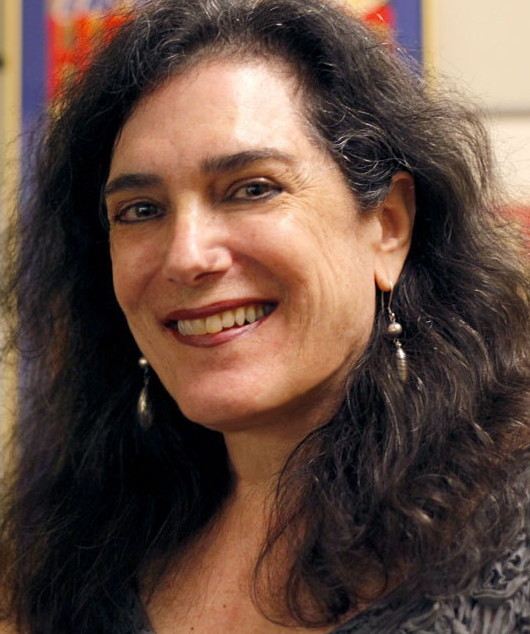
Joyce Van Dyke

Regina Jorgenson

Meenakshi Narain
Raji Patel

Joyce Van Dyke

Joyce Van Dyke, Playwright

Joyce Van Dyke’s The Women Who Mapped the Stars, commissioned by Central Square Theater, is receiving its world premiere April 19 – May 20, as the inaugural production of the Brit D’Arbeloff Women in Science Production Series.

Running simultaneously is the off-Broadway premiere of Daybreak, the story of two women friends in the aftermath of the Armenian genocide, produced by Pan Asian Repertory Theatre, with the support of a major grant from the National Endowment for the Arts (Beckett Theatre at Theatre Row, April 21 – May13.)  Joyce’s other plays include The Oil Thief, commissioned by the Ensemble Studio Theatre / Sloan Project, produced by Boston Playwrights’ Theatre and winner of the Elliot Norton Award for Outstanding New Script (2009). A Girl’s War was produced by Golden Thread Productions (2009), New Repertory Theatre (2003), and Boston Playwrights’ Theatre (2001), and won the Gassner Award and the Boston Globe’s “Top Ten” plays of 2001. In 2015, she was commissioned by the Armenian Heritage Foundation to write a site-specific play, Friends of Armenia, that was produced at Boston’s historic Faneuil Hall.

Joyce has been awarded residencies from the MacDowell Colony, the Huntington Theatre Playwriting Fellows program, and Central Square Theater’s PlayPen. She teaches playwriting and Shakespeare at Northeastern and Harvard. www.joycevandyke.comJoyce 

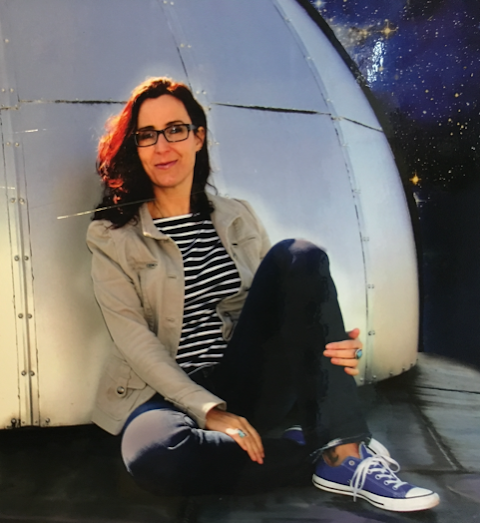
Regina Jorgenson

Regina Jorgenson, Director, Maria Mitchell Obervatory

Born and raised in California, Regina first came to the Nantucket Maria Mitchell Association as a National Science Foundation Research Experience for Undergraduates (NSF-REU) intern under the tutelage of former Director of Astronomy, Dr. Vladimir Strelnitski. This formative experience helped inspire her to make a career out of her love for astronomy.

After completing her B.S. degree in Physics, Regina won a Thomas J. Watson Foundation Fellowship that supported her in a year-long adventure travelling around the world and investigating the effects of culture on science through the eyes of women astronomers.

In 1999, Regina returned to the MMA as the Assistant Director of Astronomy until 2002 when she left to pursue graduate studies in California. Regina earned her Ph.D. in Physics at UC San Diego, specializing in studies of galaxy formation and evolution. She continued this work as a postdoctoral fellow at the University of Cambridge and then won a prestigious National Science Foundation Astronomy and Astrophysics Postdoctoral Fellowship that she took to the Institute for Astronomy at the University of Hawai’i. There she used the largest optical telescopes in the world to obtain the first spectral images of normal galaxies in the early Universe.

Regina was a Visiting Assistant Professor of Physics at Willamette University in Oregon, before returning to Nantucket as the Director of the Maria Mitchell Observatory in 2016. 

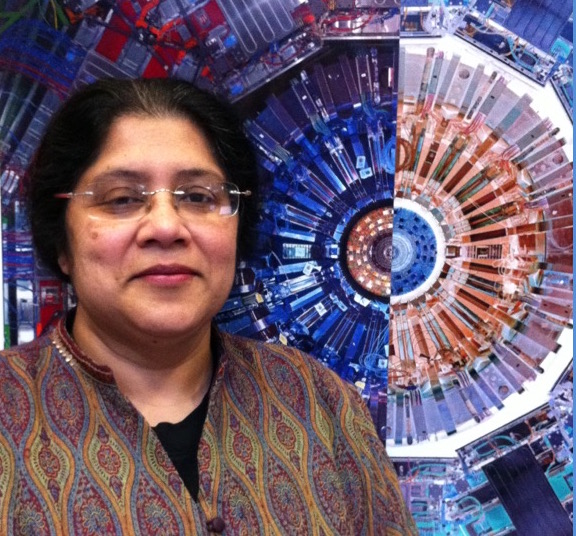
Meenakshi Narain

Prof. Meenakshi Narian, Professor of Physics, Brown University 

 Professor Meenakshi Narain’s research interests are in experimental high energy physics and her ultimate goal is to illuminate the character of physics at the TeV energy scale. At the loftiest level, it is part of the age-old quest of mankind to understand where we come from and why we are here.  Meenakshi Narain has been involved with the CMS experiment at the Large Hadron Collider at CERN (Geneva, Switzerland) and the DØ experiment at Fermilab (Batavia, IL). She was instrumental in the discovery of the top quark in 1995, which is the heaviest fundamental particle and as heavy as an Osmium atom. 

Narain continues her quest at the LHC with the CMS experiment. In 2012, Narain’s group had significant involvement in the discovery of the Higgs Boson.  Narain continues her quest at the LHC with the CMS experiment. In 2012, Narain’s group had significant involvement in the discovery of the Higgs Boson.

Prof. Meenakshi Narain received her PhD in physics from the State University of New York at Stony Brook. She joined the Brown faculty in 2007 having previously taught at Boston University. In Jan 2013, Narain was appointed the coordinator of Fermilab’s LHC Physics Center for CMS, where she has promoted collaboration with colleagues from South America, Europe, India, and Iran, in a peaceful quest for knowledge.

Narain is a Fellow of the American Physical Society. She has been a Wilson Fellow at Fermilab and has received a Professional Opportunities for Women in Research and Education grant, Major Research Infrastructure grants, and the CAREER Award from the National Science Foundation. She is also a recipient of the Outstanding Junior Investigator Award from the US Department of Energy. Her current research is supported by the DOE. She is a co-author on about 400 peer-reviewed journals and has given numerous public lectures and invited conference presentations.

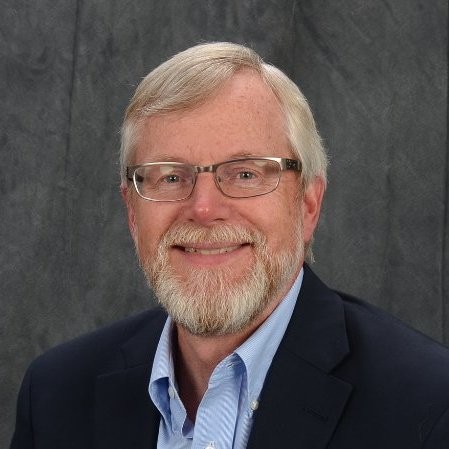
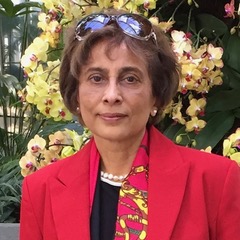
Raji Patel

Moderated by Raji Patel, Co-Director MIT NASA Space Grant Program 

 Raji Patel is the Co-Director of the MA Space Grant Consortium, a network of colleges and universities, based at MIT, to conduct NASA’s education mission.  

In this role, she works with universities and colleges in MA. She also engages with industry and the state government to promote STEM education and provide research funding to students across Massachusetts. Annually, she conducts a program at the Kennedy Space Center for MIT seniors and graduate students to enable them to learn about the operations at NASA.  

She was awarded the grant for the NASA (K-12) Summer of Innovation initiative. MA was one of four states to receive the award nationally, and she served as Director for the programs in Massachusetts including the high school scientific ballooning program, rocketry for high school girls, and teacher professional development in robotics  

Previously, she has worked as a financial and business manager in organizations in the U.S. and abroad, including Wellesley College, Price Waterhouse and the Industrial Credit and Investment Corporation of India. 

She received a bachelor’s degree in physics in India and a master’s degree in finance from MIT.

Read more

Boston’s Robotics Revolution – Learn about it!

Robots coupled with AI are already permeating our lives in a variety of ways: from consumer robots that clean our houses to industrial robots that make our cars; from robots that take care of our elderly to drones that fight our wars. Should we fear them? Probably not. But we need to better understand their impact on our work and future. Boston is the second fastest growing robotics technology cluster in the US. Join us for an afternoon of learning with leading experts. Our expert panel of robotics practitioners will educate you on the state of the technology and what the future holds. The MIT Cheetah is an example of what will be discussed.

Where:

Cambridge Innovation Center,
Havana Conf. room, 5th Floor,
1 Broadway, Cambridge MA

When:

Saturday, April 21st, 2018 1:45 PM – 5 PM

Panelists


Register

Co-sponsored by MassRobotics
Space Courtesy CIC Cambridge


CIC

Tom Ryden

Marc Raibert

Sangbae Kim

Shiraj Sen

Krishna SriKrishna

Vivek Badami

Tom Ryden

Tom Ryden, Executive Director, MassRobotics 

 Prior to joining MassRobotics Mr. Ryden was the founder and CEO/COO of VGo Communications, Inc.   While at VGo Mr. Ryden oversaw the development and launch of the VGo telepresence robot. The VGo is used by hospitals, eldercare facilities, schools and other organizations to help people stay better connected, allowing users to essentially be in two places at once.

Previously, Mr. Ryden was Director of Sales & Marketing at iRobot Corporation.  Under his leadership iRobot secured over $300M in contracts and revenue from its government and industrial products increased from $2M to over $80M annually.   In addition Mr. Ryden held roles in program management, overseeing the development of some of iRobot’s most successful products.

Mr. Ryden serves as the co-chairman of the robotics cluster of the Massachusetts Technology Leadership Council and is on the board of directors of AUVSI New England and the Robotics Technology Advisory Panel for ASME.  Mr. Ryden has a B.S. in Electrical Engineering from the University of Vermont and an MBA from Bentley University.

Marc Raibert

Founder and CEO of Boston Dynamics

Marc Raibert is founder and CEO of Boston Dynamics, a company that creates some of the world’s most advanced dynamic robots, such as BigDog, Atlas, Spot and Handle. These robots are inspired by the remarkable ability of animals to move with agility, dexterity, perception and intelligence. A key ingredient of these robots is their dynamic behavior, which contributes to their effectiveness and versatility in the real world. Before starting Boston Dynamics, Raibert was Professor of Computer Science and Robotics at MIT and Carnegie Mellon. While at CMU and MIT Raibert founded the Leg Laboratory, a lab that helped establish the scientific basis for highly dynamic robots and that set the stage for the work done at Boston Dynamics. Raibert is a member of the National Academy of Engineering.

Sangbae Kim

Sangbae Kim, Director of the Bio-mimetic Robotics Laboratory, Massachusetts Institute of Technology

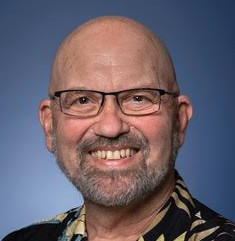
Professor Kim’s research focuses on the bio-inspired robot design by extracting principles from animals. Kim’s achievements on bio-inspired robot development include the world’s first directional adhesive inspired from gecko lizards, and a climbing robot, Stickybot, that utilizes the directional adhesives to climb smooth surfaces featured in TIME’s best inventions in 2006. Recent achievement includes the development of the MIT Cheetah capable of stable outdoor running up to 13mph and autonomous jumping over obstacles at an efficiency of animals. This achievement was covered by more than 300 media articles. He is a recipient of best paper award from International Conference on Robotics and Automation (2007), King-Sun Fu Memorial Transactions on Robotics (2008) and IEEE/ASME transactions on mechatronics (2016), DARPA Young Faculty Award (2013), NSF CAREER award (2014), and Ruth and Joel Spira Award for Distinguished Teaching (2015).

Professor Kim has a Ph d and M.S. in robotics from Stanford University and a bachelor’s in mechanical engineering from Yonsei University.

Shiraj Sen

Shiraj Sen, Lead scientist, GE Global Research

 As part of the GE Robotics team, Sen is responsible for research, development, and deployment of real-world systems for aerial and ground robots. Since 2014, Sen has worked closely with customers and multi-disciplinary teams to shape robotics projects and products in the oil & gas, power, and transportation sectors. His main areas of interest include robot learning, robot planning, computer vision, and certification of autonomous systems. He has been actively involved in the creation of two new robotics-enabled businesses at GE and has filed over a dozen patent disclosures.

Prior to joining GE, Sen was a postdoctoral fellow in the UMass Amherst College of Information and Computer Sciences Robotics Lab and worked with NASA to develop robotic learning techniques, including teaching robots to make decisions under uncertainty. He recently continued his work with NASA, winning second place in the agency’s Space Robotics Challenge. The competition tasked teams with developing software to increase the autonomy of NASA’s R5 robots so they can complete specific tasks during space travel or after landing on other planets.

Sen earned a B.S. in mathematics and computing from the Indian Institute of Technology at Kharagpur in 2004 and his M.S. and Ph.D. degrees in computer science from the University of Massachusetts Amherst in 2007 and 2012, respectively.

Krishna SriKrishna

Krishna Srikrishna, Sr. Member of Technical Staff. iRobot

Krishna has more than 20 years of engineering leadership experience developing innovative high-volume products with leading-edge technology.  Krishna is passionate about productizing robotics technology and he has been successful at de-risking product launch by leveraging pragmatic solutions that deliver tangible business value.  He has been at iRobot for the past 8 years where he led software development teams working on cloud connected Roombas with smart home autonomous navigation and mapping technology.  He has worked in many industries including consumer robotics, internet of things (IOT),  RFID and data storage industries. Krishna has a Ph. D. from the Massachusetts Institute of Technology. Prior to that he earned a Masters from The Ohio State University and a B. Tech from the Indian Institute of Technology.

Vivek Badami

Vivek Badami, Consulting Engineer, General Electric (Panel Moderator)

Vivek is responsible for new sensor technology development at GE Aviation. He has over 40 years’ experience in sensors, Monitoring & Diagnostics, Prognostics & Health Monitoring, & automation technologies in a variety of products and process applications in the Energy and Aviation space. He has subject matter expertise in a variety of sensor technologies, data acquisition, algorithms & architectures. He has 51 patents in these technologies.

Vivek earned his Bachelor’s in Electrical Engineering from the Indian Institute of Technology, Madras, Masters in Robotics from the University of Rhode Island, and PhD in Intelligent Systems from Rensselaer Polytechnic Institute.

Read more

Assistive Technologies Focus Group

IITAGNE is starting a focus group “Assistive Technologies” which will identify, research, evaluate and recommend Assistive Technologies, and/or find research partners in India or US to develop new products or enhance the capabilities of existing technologies. Currently, we are planning to focus Assistive Technologies for visually impaired individuals and work with partner Vision-Aid. However, the scope of this group is not limited to vision impaired only but is open to assist other disabilities as needed or requested by other organizations /members of this group.

We are seeking individuals who are willing to help community in India or US for this noble cause. The main objectives of this group will be:

  • Identify the technologies and products which are going to assist in learning, improving quality of life and function capabilities of persons with disabilities. Assistive Technologies are not limited to just hardware gadgets but will include software; such application of Artificial Intelligence.
  • Identify the vendors or manufacturers and talk to them for a feasibility of piloting.
  • Identify or develop some new concepts / products and help in finding partners in India or US to develop those. These concepts and products will be conceptualized after discussing /meeting with affected individuals with disabilities and their needs.

The group plans to meet once a quarter in person and may be monthly or bi-monthly on phone depending upon availability of members to plan for the agenda and act up on it.

If you are interested, please email your names and contact info to Ravi Rastogi <rsrastogi@gmail.com> and / or Roopesh Mathur <roopeshmathur1972@gmail.com>

Read more